









Nepal–U.S. Relations: A Partnership with New Possibilities

By Hark Bahadur Tamrakar (HB Tamrakar)
Chairman & Editor-in-Chief, The Ton News
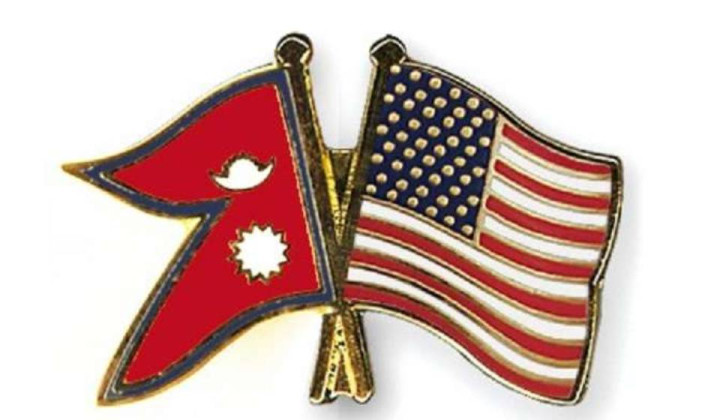
The relationship between Nepal and the United States has evolved over decades into a partnership based on mutual respect, shared democratic values, development cooperation, people-to-people connections and a growing relationship between the two countries’ private sectors and communities.

The United States established diplomatic relations with Nepal in 1947, making the relationship one of Nepal’s longstanding international partnerships. Over the years, American cooperation has contributed to Nepal’s development in areas including education, health, infrastructure, humanitarian assistance, disaster response and economic development.
Today, Nepal–U.S. relations are entering a new phase. The relationship is no longer limited to government-to-government engagement. It increasingly involves businesses, students, professionals, entrepreneurs, civil society, journalists and the growing Nepali diaspora in the United States.
From Development Cooperation to Partnership
For many years, development cooperation remained one of the most visible dimensions of the Nepal–U.S. relationship. American assistance has supported programs aimed at improving livelihoods, strengthening institutions and expanding opportunities for communities across Nepal.
However, Nepal’s changing economic and social landscape creates opportunities for a broader partnership.
Nepal has a young population, an expanding digital economy, an emerging entrepreneurial culture and enormous potential in sectors such as tourism, hydropower, information technology, agriculture and renewable energy.
The United States, with its advanced technology, capital markets, universities and entrepreneurial ecosystem, can be an important partner in helping Nepal transform these opportunities into sustainable economic growth.
The Nepali Diaspora: A Human Bridge
One of the strongest foundations of Nepal–U.S. relations is the Nepali community living in the United States.
Nepali-Americans have built businesses, pursued professional careers, studied at American universities and contributed to communities across the country. At the same time, they remain connected to Nepal through family, investment, philanthropy, culture and knowledge.
This community can serve as a powerful bridge between Nepal and the United States.
The future of bilateral relations should therefore recognize diaspora engagement not only as a social connection but also as an economic and knowledge partnership.
Remittances have traditionally played an important role in Nepal’s economy. The next opportunity is to encourage greater participation of the diaspora in productive investment, entrepreneurship, technology transfer and long-term development.
Education and Youth
Education is another important pillar of Nepal–U.S. relations.
Thousands of Nepali students have pursued higher education in the United States, gaining knowledge and international experience. Many return to Nepal with new skills, while others contribute to Nepal through professional networks, investment and collaboration from abroad.
Building stronger academic partnerships between Nepali and American universities could create opportunities in science, technology, medicine, entrepreneurship, climate studies and public policy.
Young people should be placed at the center of this relationship because they will shape the future of both societies.
Trade, Investment and Entrepreneurship
Nepal needs more investment, technology and international market access to accelerate economic transformation.
The United States can be an important source of investment, innovation and entrepreneurship. Nepal, meanwhile, can offer opportunities in sectors where it possesses significant potential.
Hydropower, tourism, information technology, agriculture, clean energy and digital services are among the areas where stronger cooperation could create mutual benefits.
A predictable investment environment, transparent regulations and stronger institutions will be essential if Nepal is to attract more international investment.
Disaster Response and Humanitarian Cooperation
Nepal is highly vulnerable to earthquakes, floods, landslides and other natural disasters. Cooperation between Nepal and the United States in humanitarian assistance, disaster preparedness, rescue capacity and climate resilience can become increasingly important.
Recent disasters have demonstrated that international cooperation is not merely a diplomatic concept. It can directly affect the lives of ordinary people.
Strengthening mechanisms for rapid humanitarian cooperation, technology sharing and disaster-risk reduction should therefore remain an important part of the bilateral relationship.
A New Generation of Nepal–U.S. Relations
The Nepal–U.S. relationship should now move beyond a traditional donor-recipient framework toward a more balanced partnership built around investment, innovation, knowledge, entrepreneurship and people-to-people connections.
Nepal can contribute its human capital, cultural diversity, strategic location and growing entrepreneurial potential. The United States can contribute technology, education, investment, innovation and global networks.
The objective should not simply be to increase the number of agreements between governments. The real measure of success should be whether those agreements create opportunities for citizens, businesses, students, entrepreneurs and communities.
As Nepal continues its journey toward economic transformation, stronger relations with the United States can provide important opportunities. At the same time, Nepal must define its national priorities clearly and engage with the United States on the basis of mutual respect, transparency and shared interests.
The future of Nepal–U.S. relations belongs not only to diplomats and political leaders. It belongs equally to students, entrepreneurs, professionals, journalists, investors, families and the Nepali diaspora.
A stronger Nepal–U.S. relationship can ultimately become a stronger bridge between the people of Nepal and the people of the United States.
Writer:
Hark Bahadur Tamrakar (HB Tamrakar)
Chairman & Editor-in-Chief
The Ton News